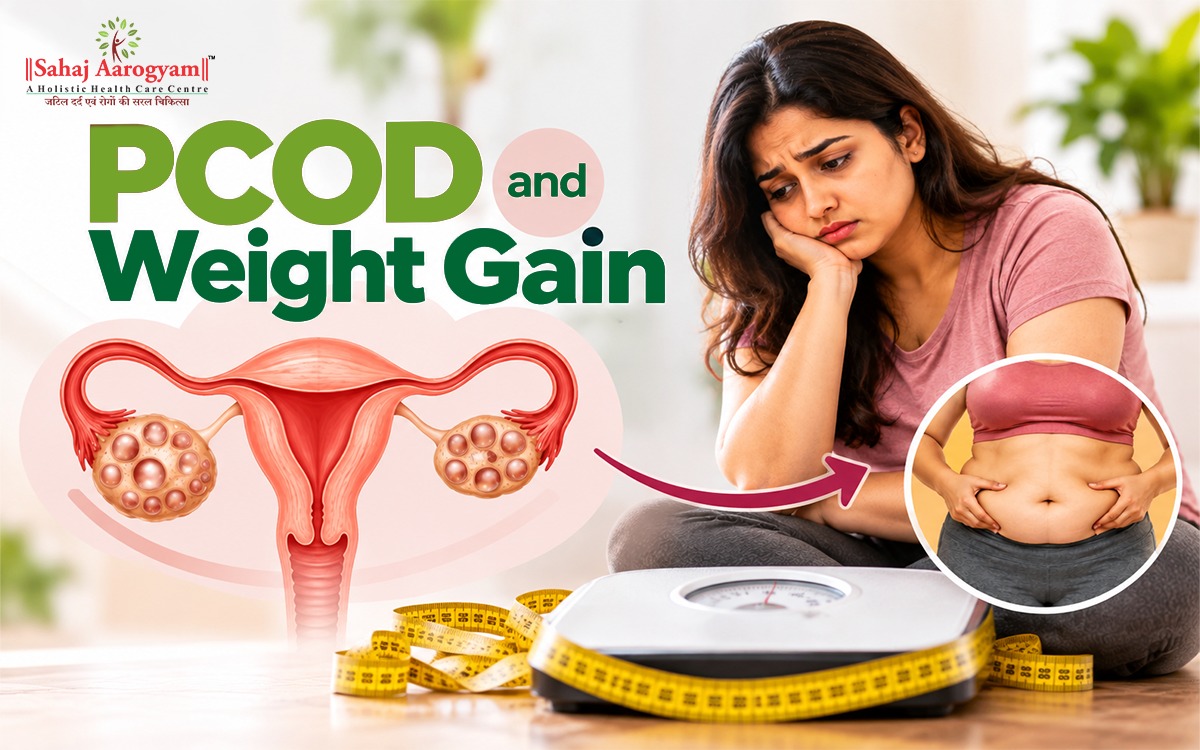
Understanding the relationship between hormonal health, nutrition, metabolism, physical activity, sleep and stress can help create a more practical approach. For women looking for PCOD weight management in Indore, personalised guidance can help identify the lifestyle and nutritional factors that may need attention.
At Sahaj Aarogyam, PCOD and weight-related concerns can be approached through an integrated care model that brings together nutrition, weight management, lifestyle guidance and other relevant wellness disciplines. The aim is to understand the individual's needs rather than rely on a single generic routine.
What Is PCOD?
PCOD is a hormonal and metabolic condition that can be associated with irregular menstrual cycles, ovulation-related concerns, acne, excess hair growth and changes in body weight.
Symptoms can vary significantly from one woman to another. Therefore, PCOD management should not be based on one symptom or a one-size-fits-all plan.
A professional assessment can help identify the concerns that may require attention and guide an appropriate nutrition, lifestyle and healthcare approach.
Why Can PCOD Be Associated With Weight Gain?
Weight gain associated with PCOD is influenced by multiple factors and should not be viewed simply as a matter of willpower.
Hormonal and metabolic changes may make weight management more challenging for some women. At the same time, sleep, stress, physical activity, eating patterns and individual health factors can influence body composition.
This is why understanding the person's overall health picture is important before recommending a routine.
How Sahaj Aarogyam Can Support PCOD-Related Weight Management
PCOD-related weight concerns often involve more than one lifestyle factor. At Sahaj Aarogyam, the approach can combine relevant areas such as weight management, clinical nutrition, lifestyle guidance and integrated wellness care according to the individual's needs.
The focus is not simply on a number on the weighing scale. A personalised plan can consider eating habits, physical activity, sleep, stress, body composition and other relevant health concerns.
This integrated approach is useful for people looking for structured guidance instead of trying multiple restrictive diets without understanding the factors affecting their health.
PCOD and Weight Loss: Why Extreme Diets May Not Be the Answer
Very restrictive diets may appear attractive when weight gain becomes frustrating, but they can be difficult to maintain and may not address the factors contributing to an individual's concerns.
A more sustainable approach can focus on balanced nutrition, appropriate portions, regular physical activity, adequate recovery and realistic lifestyle changes.
At Sahaj Aarogyam, nutrition and weight-management support can be tailored around the person's existing routine and health requirements rather than applying the same diet to everyone.
What Does a Practical PCOD Weight Management Plan Include?
A useful plan may involve several connected areas rather than one isolated intervention.
1. Personalised Nutrition
Nutrition is an important part of PCOD management. A suitable plan can consider food preferences, eating patterns, activity level, health concerns and individual goals.
Sahaj Aarogyam's weight management and nutrition approach can be relevant for people who need structured dietary and lifestyle guidance alongside their broader wellness plan.
2. Regular Physical Activity
Movement is an important part of a healthy lifestyle. Depending on fitness level and individual health considerations, suitable activity may include walking, strength exercises, mobility work or other appropriate forms of exercise.
The objective should be to build a routine that is realistic and sustainable rather than relying on short-term intense programs.
3. Sleep and Stress Management
Healthy weight management is not limited to food and exercise. Consistent sleep and stress-management habits can make it easier to maintain healthy routines.
Simple steps such as maintaining a regular sleep schedule, creating time for recovery and practising relaxation techniques may support overall lifestyle consistency.
4. Monitoring Progress Beyond Weight
Weight is only one possible measure of progress. Depending on individual goals, other useful areas may include waist measurements, physical activity, energy levels, sleep quality, eating patterns and clinically relevant health indicators.
A broader view can make the management process more practical and less focused on a single number.
When Should You Consider Professional PCOD Support?
Professional guidance can be useful when PCOD symptoms continue, menstrual cycles are significantly irregular, weight management remains difficult despite consistent lifestyle efforts, or other hormonal and metabolic concerns are present.
It is also important not to assume that every symptom is caused by PCOD. Similar symptoms may occur with other health conditions, so appropriate professional assessment is important.
For women seeking PCOD management in Indore, Sahaj Aarogyam can provide an integrated setting where nutrition, weight management and relevant wellness services can be considered together according to individual requirements.
How Sahaj Aarogyam's Integrated Approach Differs From a Generic Diet Plan
A generic diet plan usually focuses on what a person should eat. However, PCOD-related concerns can involve several areas at the same time.
An integrated approach considers the person's routine, nutrition, physical activity, weight-management goals and other relevant health concerns. Sahaj Aarogyam combines multiple healthcare and wellness disciplines, allowing the care plan to be considered around the individual's overall needs.
This does not mean that the same approach is suitable for everyone. The appropriate plan depends on individual assessment and professional guidance.
PCOD Management Is About More Than Weight
PCOD management should not be reduced to weight loss alone.
A broader approach can include menstrual health, metabolic well-being, balanced nutrition, physical activity, sleep, stress management and overall quality of life.
For someone searching for PCOD weight management in Indore, the goal should be to build healthier, sustainable habits while addressing the factors that may be relevant to their individual situation.
Frequently Asked Questions
1. Can PCOD cause weight gain?
PCOD can be associated with weight gain and difficulty managing weight in some women. However, nutrition, activity, sleep, stress and metabolic factors can also influence weight.
2. Can losing weight improve PCOD symptoms?
Weight management may improve some metabolic and reproductive features in women with higher weight, although individual results vary and weight should not be the only measure of progress.
3. What is the best diet for PCOD?
There is no single diet suitable for every woman with PCOD. A balanced eating pattern personalised to health needs, preferences and lifestyle is more practical.
4. Is exercise important for PCOD?
Regular physical activity is an important part of lifestyle management and can support fitness, metabolic health and overall well-being.
5. Can stress affect PCOD management?
Stress can make healthy routines harder to maintain and may influence sleep, eating patterns and physical activity. Stress management can therefore be part of broader lifestyle care.
6. Should I follow a very low-calorie diet for PCOD?
Very restrictive diets should not be followed without appropriate professional guidance. Sustainable nutrition and lifestyle changes are generally more practical for long-term management.
7. Can Sahaj Aarogyam help with PCOD-related weight management?
Sahaj Aarogyam offers integrated nutrition and weight-management support that can be considered alongside relevant wellness services based on individual needs.
8. When should I seek professional help for PCOD?
Consider professional evaluation when symptoms persist, menstrual cycles are significantly irregular, weight management remains difficult, or you have concerns about hormonal or metabolic health.
PCOD and weight gain can be connected, but managing them is rarely as simple as eating less or exercising harder. Hormonal health, nutrition, physical activity, sleep, stress and metabolic factors can all influence the overall picture.
A personalised and sustainable approach can help women work toward healthier routines without relying on extreme diets or short-term solutions. For those looking for PCOD weight management in Indore, Sahaj Aarogyam's integrated approach brings together nutrition, weight management and relevant wellness support according to individual needs.
The right approach should always be based on appropriate assessment and professional guidance rather than assumptions or a one-size-fits-all plan.